

 Crops & Grains
 Coffee, Tea & Cocoa
 Spices & Herbs
 Plantation Crops
 Fruits & Vegetables
 Seafood & Aquaculture
 Dairy
 Meat & Livestock
 Poultry & Eggs
 Processed & Packaged Foods
 Organic & Specialty Products
 Use cases
 Success Stories
 White Papers
 Blog
 Product Roadmap
 Our Journal
Paneer, Transparency, and Blockchain: The Future of Food Traceability in India
India's dairy industry is one of the largest in the world, supplying millions of households with essential products such as milk, curd, butter, cheese, and paneer. Among these, paneer holds a special place in Indian cuisine, serving as a staple ingredient in homes, restaurants, hotels, and food processing industries. However, with increasing demand comes greater responsibility to ensure that paneer reaching consumers is safe, authentic, and produced under strict quality standards.
The Growing Importance Of Paneer Traceability
Consumers today are becoming more conscious about the food they eat. They want assurance that dairy products are fresh, free from adulteration, and sourced responsibly. At the same time, retailers, exporters, and regulators are demanding greater visibility into every stage of the dairy supply chain. This is where food traceability and blockchain technology are transforming the future of India's dairy sector.
Paneer is highly perishable and requires careful handling throughout production, transportation, storage, and distribution. Even small lapses in hygiene or temperature control can affect its quality and safety.
Challenges commonly faced in the paneer supply chain include:
- Milk adulteration
- Poor hygiene during production
- Inconsistent quality standards
- Cold chain failures
- Counterfeit or mislabeled products
- Lack of visibility across suppliers
- Delayed product recalls
Without proper traceability, identifying the origin of quality issues becomes difficult, resulting in financial losses and reduced consumer confidence.
Why Transparency Matters in the Dairy Industry
Today's consumers want more than just a product—they want confidence in its origin and production process.
Transparency also benefits retailers, exporters, and regulatory authorities by improving accountability throughout the supply chain.
Providing answers to these questions strengthens brand reputation and builds lasting consumer trust.
- Where did the milk come from?
- Was the milk tested for quality?
- Was the paneer produced in a certified facility?
- Were food safety standards followed?
- How long was the product stored?
- Has the cold chain been maintained?
- Is the product authentic?
Products should be built to last longer and withstand normal use. Better durability means fewer replacements, less waste, and lower environmental impact. Questions consumers increasingly ask include:
Understanding Blockchain in Food Traceability
Blockchain is a decentralized digital ledger that securely records transactions and supply chain events. Once information is added, it cannot be altered without creating a transparent record of every change.
Secure, Tamper-resistant, Transparent, Time-stamped, Easily verifiable, Shared among authorized stakeholders. Every participant in the dairy supply chain—from farmers and processors to distributors and retailers—can contribute verified information, creating a trusted history for every batch of paneer.
Unlike traditional record-keeping systems, blockchain ensures that traceability data remains:
Tracking Paneer from Farm to Table
Blockchain enables complete visibility throughout the paneer production journey.
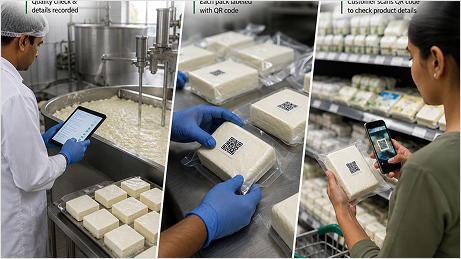
1. Dairy Processing : At the manufacturing facility, blockchain records critical production information such as: Batch numbers,Processing date, Pasteurization details, Quality inspections, Food safety test results, Equipment sanitation records, Packaging details, Production staff verification. Every production step becomes part of the product's permanent digital history.
2. Milk Collection: The traceability process begins at the dairy farm.Important information recorded includes: Farm identification, Farmer details, Milk collection time, Animal health records, Feed information, Milk quality testing results, Temperature during collection. Each milk batch receives a unique digital identity before entering the processing facility.
Preventing Dairy Fraud
Food fraud remains a significant challenge within the dairy sector. Common examples include:
Blockchain significantly reduces these risks by maintaining immutable records that can be independently verified throughout the supply chain. Tamper-resistant documentation makes fraudulent practices much easier to detect.
Adulterated milk,Synthetic dairy products, Mislabeling product origin, False quality claims, Counterfeit packaging, Expired products sold as fresh.
Supporting Faster Product Recalls
In the event of contamination or quality concerns, rapid product recalls are essential. Traditional recall processes often involve manual paperwork and incomplete records, leading to delays.
Accurate traceability minimizes disruptions while preserving consumer confidence.
Blockchain improves recall management by allowing businesses to: Identify affected batches immediately, Locate distribution points, Notify retailers quickly, Remove only impacted products, Reduce recall costs, Protect consumers more effectively
How Foodtraze Supports Blockchain-Based Dairy Traceability?
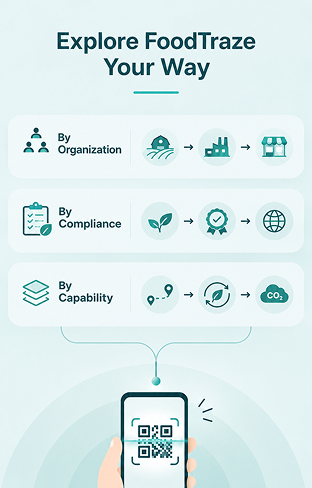
Foodtraze empowers dairy producers, processors, distributors, and retailers with digital traceability solutions designed to enhance supply chain transparency. By integrating blockchain technology, QR code-enabled product verification, batch tracking, and digital compliance records, Foodtraze enables businesses to monitor every stage of paneer production—from milk collection and processing to transportation and retail distribution.
With end-to-end visibility, stakeholders can improve food safety, streamline audits, strengthen consumer trust, and respond quickly to quality issues. Foodtraze helps dairy businesses embrace digital transformation while meeting the growing demand for traceable, safe, and sustainable food products.
Conclusion
Paneer is more than just a popular dairy product—it represents the trust consumers place in India's food system. As expectations for food safety, authenticity, and transparency continue to rise, traditional record-keeping methods are no longer sufficient to manage complex dairy supply chains.
As India moves toward a smarter and more connected food ecosystem, blockchain will play a vital role in shaping the future of dairy traceability and ensuring that every piece of paneer reaching consumers is backed by trust, quality, and transparency.
Blockchain-powered food traceability offers a transformative solution by creating secure, tamper-resistant, and transparent records that follow every batch of paneer from farm to table. By combining blockchain with digital traceability platforms like Foodtraze, dairy businesses can strengthen food safety, combat fraud, improve regulatory compliance, optimize operations, and build lasting consumer confidence.